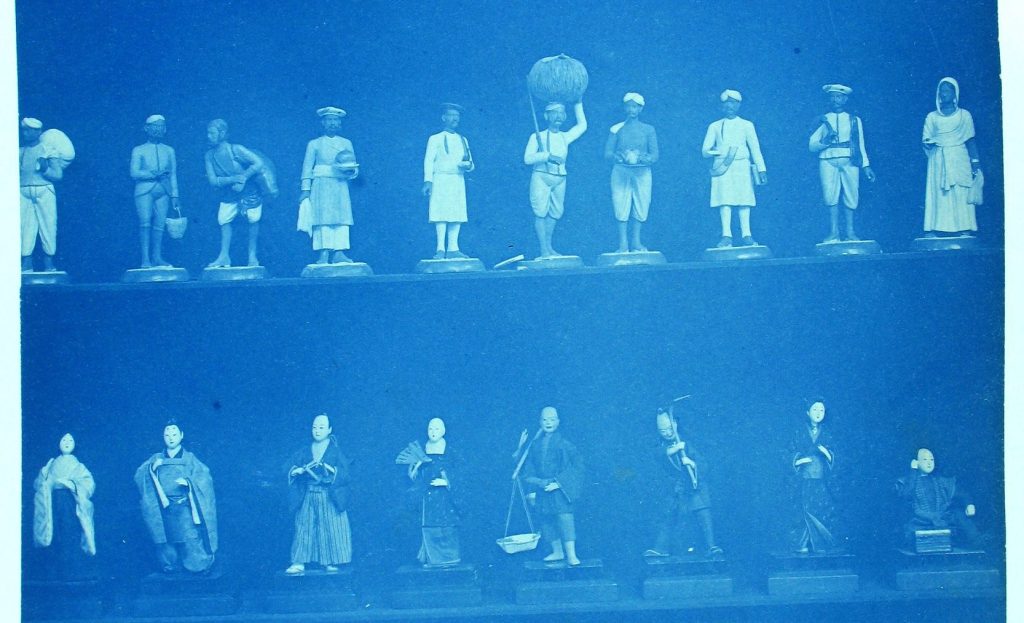
Figure 1 Untitled Cyanotype in Photographic Survey of the Smithsonian. Note. Thomas Smillie, 1890-1913, Smithsonian Libraries and Archives.
There is a version of curation that has nothing to do with moodboards, aesthetic grids, or algorithmic playlists. I say this as someone who is genuinely, occasionally insufferably, frustrated by how loosely the term is thrown around. Curation is not solely storytelling but contains it. It is not taste-making, though taste informs it.
In the traditional sense, curation is the act of selecting, organizing, and presenting objects to create meaningful, educational experiences that engage the public. Curatorial workers research, acquire, and interpret objects, like composers of context. They unearth common themes and ideas across time, assembling bodies of work to communicate messages through space. They make decisions about what enters a collection, how it is understood, and what eventually leaves it. Every one of those acts is an act of meaning-making, and without research at the center, curation loses all significance. It becomes decorative and empty.
I wanted to write about curation in a different sense, while still fully honoring its foundational practices and principles. The more I learn about this field, the more I realize that so much of its foundational theory is rooted in the ways humans learn, engage, and reflect. It doesn’t seem like too far of a leap to consider how these principles may apply to the self – particularly how we grow, understand ourselves, and navigate our lives. Our deeply intimate inner worlds. Because curators tell informed stories, it is not far-fetched to assume that the curatorial can apply to telling and creating our own.
David Carr’s (2006) radical essay Mind as Verb, argues that museums exist to serve something deeply biological within us – a need to construct meaning from change and randomness, to situate ourselves in the larger world, to learn willingly and enjoyably. Reading this essay felt like discovering the language to express something I have always struggled to articulate. What if I turned this idea inside out, flipping it inward? What if, instead of examining what museums do for us, we examined what we do for ourselves using the same framework that has shaped curatorial practice for a century? What if the self is a collection – one that is always in flux?
This metaphor is not meant to flatten or borrow carelessly from a discipline with real professional weight, more so an invitation to take its principles seriously enough to apply them to the one collection we are each solely responsible for: ourselves.
Unsolicited Collections: Agency Deficits & Cognitive Manipulation
No one chooses everything they carry.
Some parts of ourselves arrive before we have the language to understand them – family dynamics, inherited trauma, genetic predispositions. Some of it has been handed to you from institutions. Universities that shaped how you think, workplaces that taught you what professionalism looks like, and a cultural landscape that autonomously decided whose stories were worth telling and whose were not. An increasing amount of it is being deposited into you by systems designed not to complement your true self, but project onto you what you should be.
As someone whose professional life revolves largely around research, I struggle to find credible information online. Even through intentionally limited followings, I am regularly shown content that is incorrect, reactionary, and engineered to provoke emotions that can be commodified and marketed. Opportunities are buried, and nuance is often flattened into reductive diametrics. It is too difficult to locate the information that truly matters when algorithms have already decided what you need to see, who you are, and what you are likely going to purchase next. We are more easily tracked, interpreted, and reduced to two-dimensional forms that dance across screens.
It goes past inconvenience to a form of cognitive manipulation – one that is most effective when we are unaware of its occurrence entirely. When we lack autonomy over our intake, someone or something else will do it for us. Unlike a thoughtful curator working in dialogue with a community, an algorithm has no investment in your complexity. It needs you legible, predictable, and sortable.
Museums have grappled with the consequences of unsolicited collections for the past century – acquiring without intention, expanding without purpose or sustaining resources, accumulating works that reflect the biases and interests of a small circle instead of the breadth of human experience. It ends with storage facilities full of redundant works that are never seen by the public, while entire communities remain unrepresented. Flipping this sentiment inward is uncomfortable and equally worth sitting with.
What have we collected without choice?
What has been ingrained in us without our consent?
The first step of the curatorial process is an informed audit.
Self-Portraits, Interpretation, Agency, & Bias
I am not always the most reliable narrator of my own story, and I don’t mean this in a self-deprecatory way. I have my own blind spots, things I would rather not look at, parts of myself I still feel guilty about. One of the most important curatorial principles is refusing to allow bias and personal experience to cloud judgment.
My mother instilled in me a very intense awareness of my actions and my story. As a successful attorney in the American South, she has navigated the many obstacles of being a woman in a male-dominated field. She is the most intuitive person I know and continues to be an example of continued self-growth. She believes in therapy, critical reflection, and the practice of sitting with hard things instead of outrunning them. She has always seen me for who I am, even when my actions were in stark opposition to my values and nature. She expected, and still expects, more from me than impulse and mediocrity. She has helped open all the avenues that sharpened my ability to self-reflect and not look away: college, graduate school, passing wisdom. Everything has taught me, time and time again, how to see myself.
I used to see my identity as something fixed and static – a nature I could never surpass, with skills that were natural rather than fought for through hard work. Curation has challenged that. The core principles of my field, ideas that have been intensely debated and theorized for over a century, can be projected internally. The practices of acquiring, interpreting, and presenting are not fixed to the field. They are core human desires and needs that have always existed. Children pick up special rocks and flowers, even trash – collecting the objects that mean something to them. They attempt to make meaning out of seemingly random occurences – this is interpretation. They tell stories, sometimes embellishing them beyond recognition – this, in a way, is exhibition. There is something deeply personal about the curatorial. Something that awakened a part of me that was often suppressed and uncatered to.
We all curate ourselves to a certain extent. When applying for jobs, sitting for interviews, or navigating family dynamics, there is a kind of self-censorship we engage in. We meticulously choose what is of relevance, of appropriateness, of commonality. I don’t think this is a moral failing or some sign of disingenuousness. We often treat authenticity as a shining emblem of moral superiority – the original person who buys nothing, bends for no one, and remains fixed regardless of context. But true self-curation is not rigidity. Omission is not a crime but a right we all possess. Some things are better left unsaid.
Central to curatorial practice is the ability to see through noise, statistics, and bias to identify what actually matters. Not to deceive but to discern.

Curating myself used to feel isolating, even claustrophobic. Now I see this boundless freedom in it. Our identities are constantly in flux, capable of living in contradiction and even stark opposition all at once. We understand that we are not just being seen. We are being interpreted – and we participate in that same act when we look at others. The bias we must be most vigilant about is not the one others project on us, but the one we bring to our own self-portraits and stories.
The real work of interpretation asks always for outside input – for the perspectives of those who know us well enough to show us the parts of our story we have overlooked or consistently misread.
Maintenance: The Cost of Keeping
I desperately protect my ideas and my sanity. Not as a refusal to show up for others or engage with difficulty, more as a recognition that I do not have to share anything – and that my inner world is valuable in itself. In a world that has commodified human attention and nearly every aspect of daily life, to me, oversharing feels like a trap. It erodes privacy, autonomy, and the quiet interior life that creative work requires.
There is a financial, social, emotional, and spiritual cost to maintaining an identity. I am in an expensive program to eventually attain my dream job. I limit social interactions not out of indifference but to protect myself from overstimulation and exhaustion, which greatly impacts the quality of my ideas. I spend considerable time appearing as a professional – the website, publications, the intentional construction of a legible, presentable self. I could be thinking of my family, my relationships, the logistics of a move and career, but instead I am thinking about rooms that don’t yet exist, inhabited by artworks that I have never seen in person or haven’t been made yet at all. I deeply enjoy my research and creative process, but the tunnel vision is a cost worth identifying.
Maintenance in the museum is often unglamorous and chronically underfunded. Collection care – climate control, conservation, storage, security – is routinely sacrificed for expansion. New storage rooms are built. New works are acquired. New expansions are erected. All while what already exists is deteriorating. We do this to ourselves too. We acquire continuously, new obligations, relationships, and identities, without asking whether we have the resources to care for what we already hold.
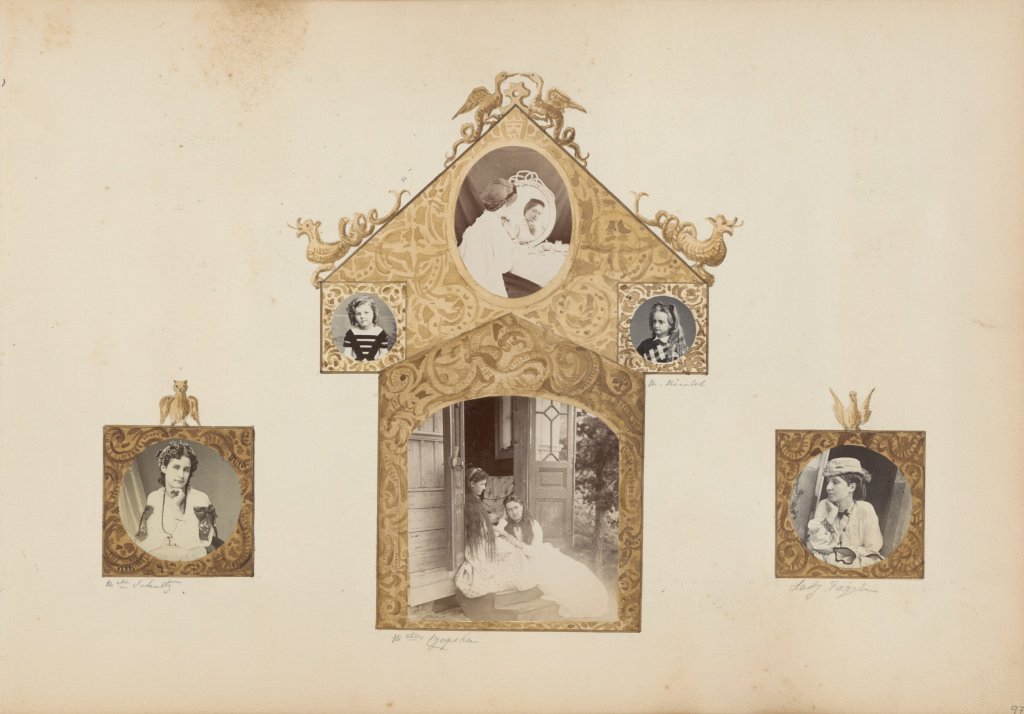
I built a business around supporting emerging and mid-career artists because their struggles resonated with me. Throughout two years of operations, my business partner and I fought mercilessly to ensure everyone felt supported, included, and visible. Then, we realized it was an impossible expectation we set for ourselves – one that rarely included thanks and ceased being about the artists who actually showed up. I became a contortionist, bending and morphing to become what everyone wanted but never asked for. I was no longer myself when operating that business. I became an entity that lacked personhood. It was only after I felt the combustible pressure of exhaustion – arguing over financial transparency, bad faith agreements, the basic dignity of the artists I was trying to serve – that I understood what maintenance cost me. Somewhere down the line, I had begun preserving things out of obligation rather than genuine care, and it weathered every sense of joy and inspiration in my creative process.
This is a common trap, not unique to people in the arts. We hold on past the point of meaning. We maintain and stay out of habit, out of fear, out of unwillingness to admit when something has run its course. There is a curatorial question worth asking: what does keeping cost you, and is that cost still worth paying?
Intentional Losses, Editing, Serendipity
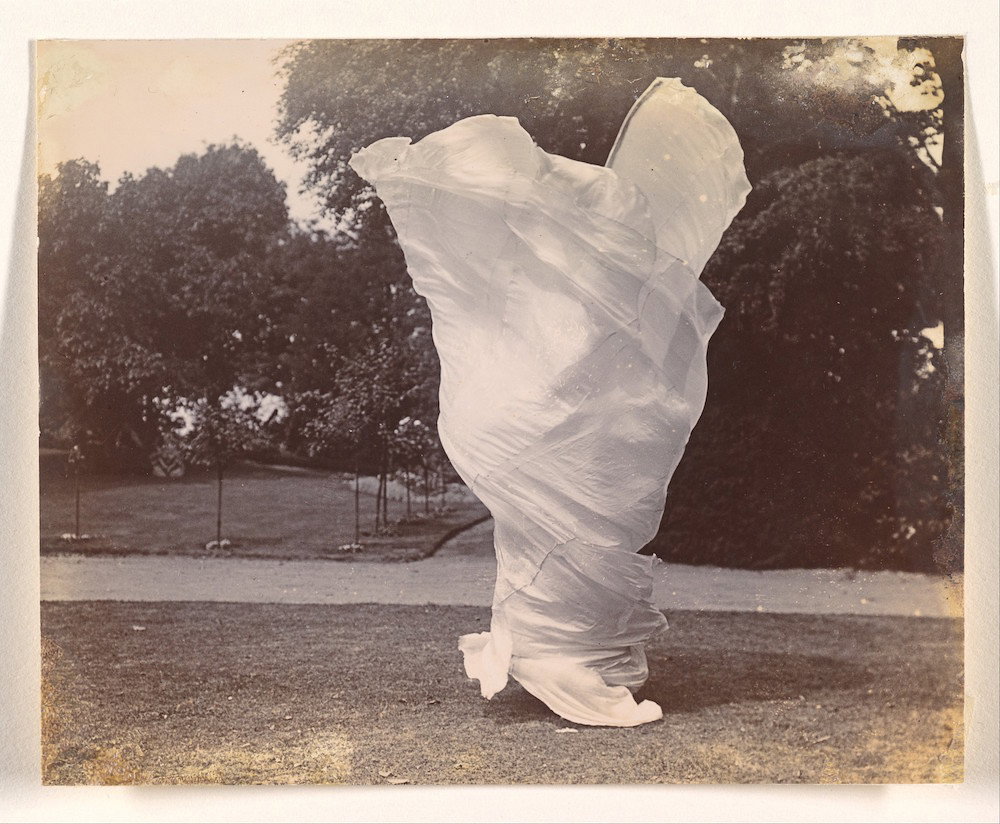
Deaccessioning is one of the most misunderstood practices in the museum world. For many, the gut reaction is that museums must hold on to everything. Disposal is a betrayal of public trust, a failure of institutional responsibility, and a recognition of museums’ humanity. But this thinking actually fuels one of the fundamental issues facing museums today: constant, thoughtless expansion to accommodate internal needs instead of public ones. Storage warehouses are built in place of community programs. New galleries rotate as many works as possible each year without accompanying research and interpretation, while existing collections decay unseen. And collections that hold fifteen works by the same Western master continue to hold them and collect more, while entire communities remain unrepresented.
Deaccessioning, when practiced ethically and with genuine community input, is a form of discernment. It is the act of asking what is missing, what the collection needs to become, and what must be released so something more necessary can arrive.
I really had no choice but to let go of the people-pleaser in me, the version driven by ego and the desire for a very specific kind of approval and thus control. I had a rather harsh reckoning, realizing I would never be capable of pleasing everyone at any given moment. I cannot be a shapeshifter. This doesn’t mean I am fixed and static. While I adapt and tailor myself to context in basic ways, I no longer stray from my values and core beliefs to do it. Letting go of the debilitating need to be liked, and turning instead to being respected, opened up something that feels sacred to me right now. A sense of freedom in a time where creatives feel the walls closing in on them, when expression is too loud, too controversial, and too expensive.
There is resentment I have still not fully released. Judgement may be a more honest word for it. At times, I am frustrated with how artists are treated and represented, disillusioned with the state of my life and my field. But I have not let go of this emotion entirely because it propels me forward, unfortunately, more than desire and joy.
There is a difference between judgment that generates imagination and action, and judgment that calcifies into paralysis.
David Carr (2006) writes that museums should be advocates for free imagination – a crucial sentiment for both institutions and people. When we are stuck in a place of pure judgment, we can subconsciously affirm that no better alternative can exist. But when judgment is accompanied by imagination and action, something shifts. I built my business on the critiques and gaps of my workplace. The things I didn’t like, I changed. The things that limited artists and staff, I edited. Judgment in its most useful form enables the imagining of something different and better.
Giving up and letting go are radically different acts, not just semantic. Giving up is losing hope, drive, and passion. It leads to regret and resentment, and a dull, persistent ache. Letting go is accepting that we are not masters of everything in our lives, honoring that the world has its own rules and laws, and not allowing powerlessness to defeat us. If we allow it, that powerlessness will push us somewhere we may have never imagined on our own. With a looser grip, rejection stings less. It increases a sense of freedom and play. When I can talk myself down from that ledge of life or death, “I can’t live without this”, “why me”, I’m usually led to something new that fills my life with joy and motivation again. It is a cliche I used to hate, but it is unfortunately and consistently true.
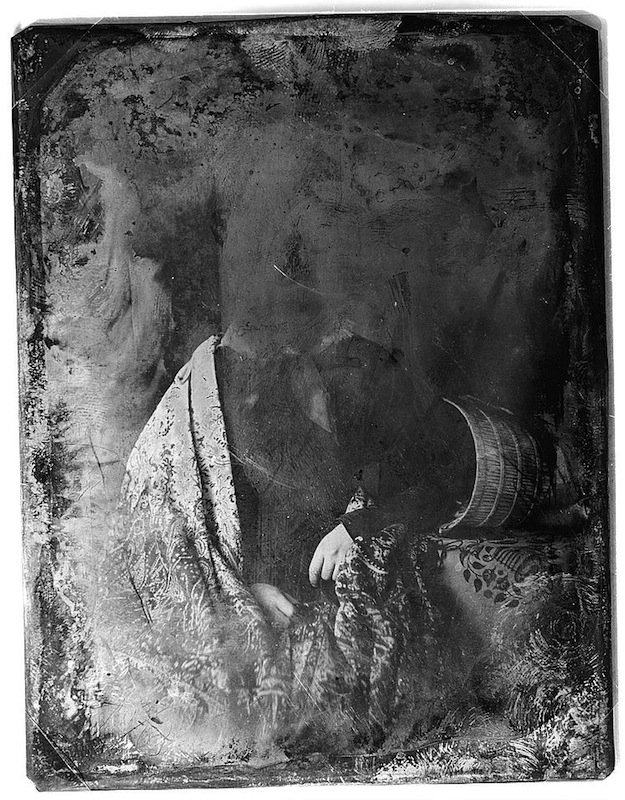
A well-curated life is not a perfectly organized one.
It is a balanced, multifaceted life with layers of meaning that can coexist, reinforce one another, and be true at once. It is expressing yourself through different outlets and being comfortable with change and growth, knowing when to be harder on yourself and when to have fun. It is learning to critique the systems you are a part of without excommunicating yourself. Our discernment tells us what is important and what is peripheral, and is strengthened by diversity – different people with unique strengths and perspectives, different stories and varied outcomes.
Curating with intention requires critical thinking and self-reflection, especially when it is painful and intimidating. The curatorial is only achieved through research, both on the self and our external world. We cannot source worthwhile knowledge from a thirty-second video. A well-curated life cannot take root when we refuse to sit with discomfort and examine what it is telling us. It must eventually be done in dialogue with others, with a willingness to stand firm and a willingness to be wrong. The desire to continue learning sits at its core, even when – especially when – what you learn asks you to change.
The entire world wants to curate us for it. Trends try to curate our aesthetics, down to the way our bodies look. Businesses want to curate our consumption. Technology companies want to curate our thoughts and the media we consume. It is far easier to be sold things when we are legible, sorted into general categories alongside thousands of people pushed down the same channels. And then we wonder why true originality is rare under consistent barrages of hollow provocations and regurgitated opinions.
I am tired of being lectured at, categorized, sold to, and reduced to a comprehensible signal. I long for mystery, for a slow reveal, for the coexistence of contradiction. I hope we begin to see others and ourselves as human before we see them as products. And I hope that the practice of intentional, research-grounded, community-informed curation can offer an even slightly new model for how to do that.
We are all, always, mid-acquisition. Constructing ourselves and our exterior lives in an endless process of gathering, interpreting, releasing, and starting over. It is this process that is the most honest portrait we will ever make of ourselves.

References
Aguado, O. (1862). Woman Seen From the Back from Rückenfiguren [Photograph]. The Metropolitan Museum & Public Domain Archive. https://pdimagearchive.org/images/9e25a1ab-77a4-4d60-8c9e-18973a9dc232/
B, M. (1870). Untitled Image from Madame B Album [Collage]. Art Institute Chicago & Public Domain Archive. https://pdimagearchive.org/images/060b451b-2896-4cc7-9b6f-096702e54775/
Beckett, S. J. (1900). Loie Fuller Dancing [Photograph]. The Metropolitan Museum & Public Domain Archive. https://pdimagearchive.org/images/e1884524-35f8-45e9-bf35-8124ac4bd6ae/
Brady, M. (1844-60). Portrait of unidentified man [Photograph]. Library of Congress & Public Domain Archive. https://pdimagearchive.org/images/c76a8137-e692-4bb2-87c4-105b406542a7/
Brady, M. (1844-60). Portrait of unidentified woman in theatrical costume [Photograph]. Library of Congress & Public Domain Archive. https://pdimagearchive.org/images/0b279ae8-637e-44f2-b434-83379a9e11b9/
Carr, D. (2006). Mind as verb. In H. H. Genoways (Ed.), Museum philosophy for the Twenty-First Century (pp. 11–18). AltaMira Press.
Feuillet, R. A. (1701). Untitled Image from Choregraphie [Dance Notation]. Boston Public Library, MA, United States. https://pdimagearchive.org/images/8b948c89-fe77-4777-b930-e80b4a19b5f9/
White, J. H. (1973-4). Black student in a Black studies class in a West Side Chicago classroom reading [Photograph]. Documerica, U.S. National Archives, & Public Domain Archive. https://pdimagearchive.org/images/d835a5dd-c848-423a-9c25-957cbe4c84ae/
White, J. H. (1973-4). Construction workers silhouetted against a bright October sun in South Side Chicago [Photograph]. Documerica & U.S. National Archives, & Public Domain Archive. https://pdimagearchive.org/images/152170c6-c9e4-4f0e-a43c-46956bfd3894/


Leave a Reply