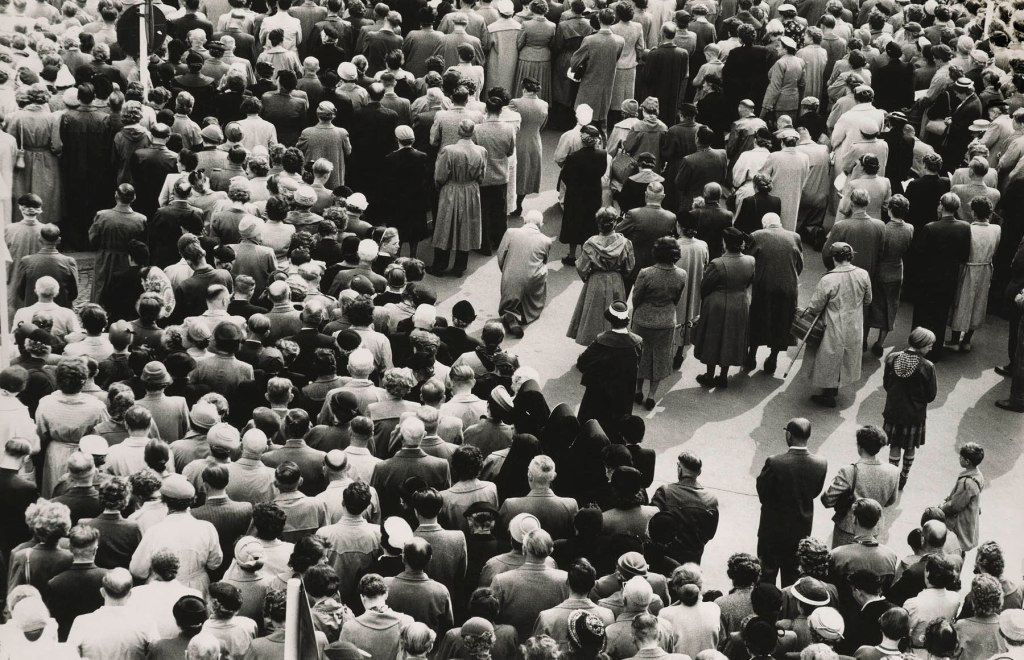
Figure 1 Chargesheimer at Museum Ludwig, Cologne, Germany. Note. (Carl-Heinz Hargesheimer & Rheinisches Bildarchiv Köln, 1956).
“Museums are managers of consciousness. They give us an interpretation of history, of how to view the world and locate ourselves in it.”
Hans Haacke (1994), New York Times
Museums have never been neutral spaces, nor bubbles in which the outside world bears no weight. They are assembled through decisions about what to collect, whose stories to tell, who is welcome, and who holds the authority to create change. And yet, the public rarely considers who is genuinely responsible for holding it all together. Who tends to the institution when exhibitions close and the press is preoccupied?
Museum management is work that is far less glamorous, much more human, and more consequential than we acknowledge. The public expects more from museums than it ever has – more honesty, inclusion, accountability to the communities it serves – and funding structures are changing. Cultural policy is affecting institutional autonomy, and museum directors’ roles are being redefined by forces outside their field.
It is time to interrogate not just what museums are becoming, but who is steering that becoming – whether they are truly empowered to do so, and if the field is ready to trust leaders with the integrity to serve communities rather than solely institutional needs. We do not need more entrepreneurial visionaries. We need accountable and transparent facilitators.
What is Museum Management?

There is a damaging assumption, in popular imagination and institutional practice, to conflate museum leadership with entrepreneurship. A great director is essentially a great entrepreneur who can perform impressive financial miracles, right? A fundraiser. A brand strategist. Someone who can generate revenue and keep donors happy while the real work happens elsewhere. This myth is just as inaccurate as it is harmful to the institutions that internalize it.
For our purposes, leadership is the “control and organization of something… the process of planning and organizing resources and activities to achieve specific goals in the most effective and efficient way” (Scott, 2024, p. 7). This highlights two core priorities: vision – articulating and defending the institution’s purpose, and stewardship – the care of people, resources, and relationships in service of that purpose. Not revenue generation, nor board appeasement. These fundamental responsibilities must be delicately balanced. Without stewardship, vision cannot manifest in action. Without vision, stewardship becomes unstrategic and disorganized.
As public funding for cultural institutions has declined, the pressure to fill that gap has fallen upon individual directors, reframing their role as financial problem-solvers rather than mission-driven leaders.
“It is tempting to wonder whether the notion of the entrepreneurial leader represents an attempt to individualize responsibility for the financial sustainability of the institution, rather than confronting the systemic reasons for declining investments from governments.”
Carol A. Scott (2024), Museum Leadership: Where To From Here?
In simpler terms, we defund museums and blame their leaders for institutional limitations. This is quietly devastating for many museums. When a director’s energy is consumed by budget anxiety, the real work – protecting mission integrity, advocating for staff, and building genuine community relationships – gets deferred. Management becomes a crisis response, and the museum slowly loses a sense of what exactly it stands for.
Museum management is an act of sustained belief in what the institution can be, and the discipline to protect that belief when everything around it pushes back.
Managing Meaning: What Makes a Leader?

If vision and stewardship are at the core of this work, we should ask ourselves: what kind of person is actually equipped to tend to such abstract, important responsibilities? And more importantly, are we appointing these people?
A troubling gap has emerged within the boardrooms of cultural institutions: a disconnect between the qualities institutions seek when hiring directors and the qualities those directors cite as most important in day-to-day operations (Scott, 2024, p. 11). Selection committees and current leaders describe entirely different roles. This structural problem is rooted in a fundamental misunderstanding of what museum leadership demands.
What does leadership really require? Based on my time in the cultural sector, case studies, and peer-reviewed literature, successful museum directors embody these three dispositions.
Empathetic The willingness to see from another’s perspective. A director who cannot understand the experiences of frontline staff, visitors, and community partners will consistently make choices that alienate the people the institution is supposed to serve. | Collaborative & Consensus Building The willingness to leverage pre-existing networks and relationships within and around the institution, finding common ground across competing interests. It is the difficult work of ensuring that every stakeholder feels heard and represented. | Intuitive & Agile The ability to anticipate challenges before they become crises, pivoting without losing sight of the institution’s mission. Museums operate in changing cultural, political, and economic climates, demanding aware leaders who can thrive without certainty. |
I have seen firsthand how the disconnection between board members and daily operations creates friction, redundancy, and stalled decision-making. When the people governing an institution lack an intimate understanding of what daily tasks and barriers actually look like, they cannot accurately diagnose and address problems or support the people navigating them. Staff need to be able to represent themselves and their experiences in spaces where decisions are made. Without that openness and transparency, expertise is eroded, autonomy is stifled, and the museum becomes more governed by abstraction than reality.
Relationship building is not peripheral to museum leadership; it sits at the core. The quality of these relationships determines almost everything else about an institution: its budget, donations, staff retention rates, outreach initiatives, and programs. For museums to become truly “community-facing, inclusive, and engaged” (Pogrebin, 2023) institutions, their leaders must fully embody these values – not just perform them in an interview.
Cultural Policy & The Limits of Autonomy: Who Controls the Culture?
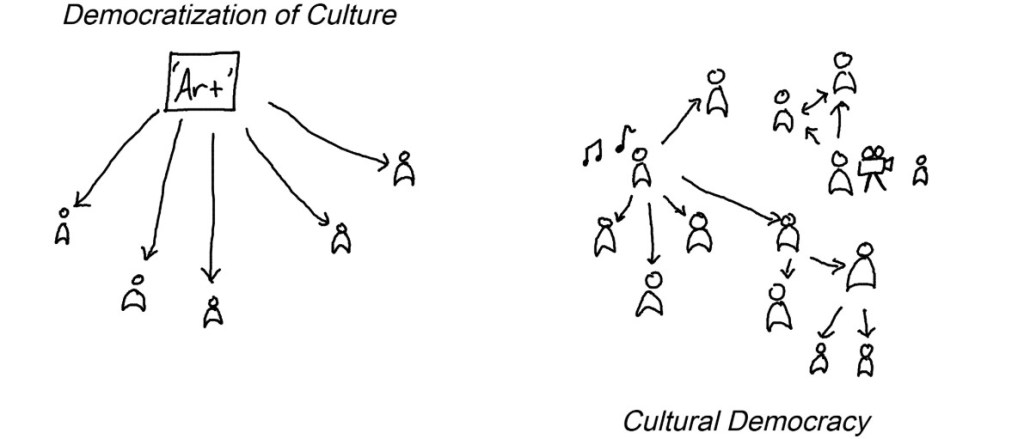
Cultural policy encompasses the laws, regulations, and policies that govern and financially support cultural institutions. It is how “governments understand and make decisions about culture, more broadly… regulating the understandings of what culture is, whom it is for, and who has responsibility for it” (Mason et al., 2017, p. 144-145). Manifesting through grant-giving associations, federal, state, and municipal governments, and the private sector, it deeply affects funding structures, program decisions, and the language used to justify actions to funders and governing bodies. And despite its legal basis – which we assume is forever fixed – it is ever-changing, shaped by political, economic, and social conditions. This instability is the field every museum director, program coordinator, and development officer navigates daily.
When cultural policy becomes an arm of economic policy, more concerned with financial sustainability than mission-fulfillment, museums are no longer evaluated for the public good they provide, but instead measured by what they produce (Mason et al., 2017, p. 141). Visitor numbers, revenue, and KPI compliance. These systems become so entrenched that genuine alternatives feel unimaginable – what Hawthorne (2025) calls “cultural policy realism”. A model that cannot hold the full weight of visitor experience, and makes scarcity the default condition of the cultural sector.
I have seen this firsthand, watching familiar faces on grant panels reward familiar faces, cycle after cycle. In reality, proximity and relationship determined outcomes far more than merit. It created highly competitive, guarded environments where scarcity logic eroded any real sense of community.
Museum leaders cannot afford to be passive. Understanding cultural policy is a core leadership competency, essential to free the sector from gatekeeping and limited expression. The institutions that will survive and remain belovedly relevant are those led by people who understand these structures, who they serve, and where they fail. The antidote to scarcity thinking is not more funding, but better leadership – listening, building dialogue, and refusing to let institutional survival come at the cost of integrity.
Architectural Equity: The Role of DEAI
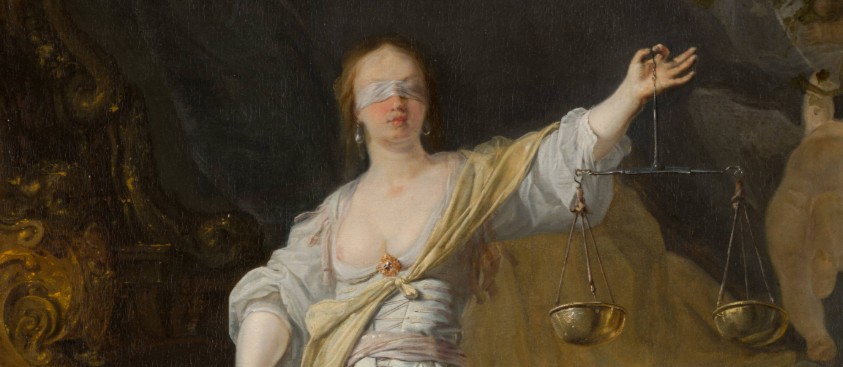
Diversity, equity, accessibility, and inclusion (DEAI) should never be approached as a checklist, a stand-alone program, hiring initiative, or annual report bullet point. Together, these tenets create a framework that must be embedded into every institutional decision, from who sits on the board to what stories are told through programming. According to 2024 research, 96% of survey respondents expressed a desire for museums to become “more inclusive, more community-focused, and more socially relevant” (Scott, 2024, p. 10). It is clear there is an overwhelming desire to challenge authoritative, institutional traditions, and leadership has a duty to make that happen.
DEAI must manifest through hiring practices, collecting, programming, education, donor relationships, and staff culture. The commitment to equity in a mission statement means little if the institution’s daily operations tell a different story, especially in a social climate where institutional gaslighting and performative action are swiftly called out on social media.
Leadership carries the deepest obligation to align with DEAI. They set the conditions in which everyone else operates. When fully integrated at the leadership level, staff, stakeholders, and communities are given a model to mirror. When it is not, no amount of effort can compensate for what the institution refuses to model from the top.
DEAI is the lens through which missions are carried out. It means staying honest and transparent about mistakes and remaining committed to the slow, imperfect, and necessary work of getting it right. The institutions that have genuinely reflected on the growing need for these priorities will be more trusted, more relevant, and more engaged with the communities they exist to serve.
To lead is to stay present with what is broken, what is becoming, and the people beside you.
Museum leadership is a deeply human practice. It is the daily work of listening to staff, funders, shifting policy landscapes, and audiences who walk through the doors carrying their own needs and stories. It is building consensus in rooms where people disagree. It is staying current enough to protect your institution and staff from forces that would rather it remain resigned. It is tending to relationships before they fracture, repairing them honestly when needed.
Integrity holds an institution together – the consistent commitment to doing what the institution claims to stand for. This cannot be done without centering the people who make everything possible: the staff whose expertise fuels daily operations, the stakeholders whose trust funds its future, and the communities whose stories give it meaning.
This is maintenance and care. Unglamorous, often unseen, never-ending, and still essential. Leadership is the practice of that care, made visible through every decision, relationship, and room where someone felt seen because someone in charge made sure they would be.
References
Bunyan, M. (2026). Chargesheimer” at Museum Ludwig, Cologne, Germany [Photograph]. Art Blart Art and Cultural Memory Archive. https://artblart.com/2024/11/01/exhibition-chargesheimer-at-museum-ludwig-cologne-germany/
Hawthorne, I. (2025). Frameworks for Understanding Cultural Policy: Lessons from the Irish Model [Drawing]. Arts Management and Technology Lab. https://amt-lab.org/blog/2025/10/frameworks-for-understanding-cultural-policy-lessons-from-the-irish-model
Kimmelman, M. (1994). At the Met: with Hans Haacke; Peering at a wide world beyond works on a wall. New York Times. Retrieved May 15, 2026, from https://www.nytimes.com/1994/12/09/arts/at-the-met-with-hans-haacke-peering-at-a-wide-world-beyond-works-on-a-wall.html
Mason, R., Robinson, A., & Coffield, E. (2017). The business of culture. In Museum and gallery studies: The basics (pp. 130–163). Taylor & Francis Group.
Mauritshuis. (n.d.). Gabriel Metsu the triumph of justice [Photograph]. Mauritshuis The Hague. https://www.mauritshuis.nl/en/our-collection/artworks/95-the-triumph-of-justice
Murawski, M. (2012). Crowdsourcing in the art museum [Photograph]. Art Museum Teaching. https://artmuseumteaching.com/2012/04/18/crowdsourcing-in-the-art-museum/
Pogrebin, R. (2023). What does it take to run a museum? The job description is changing. The New York Times. https://www.nytimes.com/2023/06/06/arts/museum-directors-challenges.html
Scott, C. (2024). Museum leadership: Where to from here. In D. Babic (Ed.), International perspectives on museum management (1st ed., pp. 7–19). Taylor & Francis.
Wikipedia contributors. (2026). The creation of Adam [Photograph]. Wikipedia. https://en.wikipedia.org/wiki/The_Creation_of_Adam


Leave a Reply