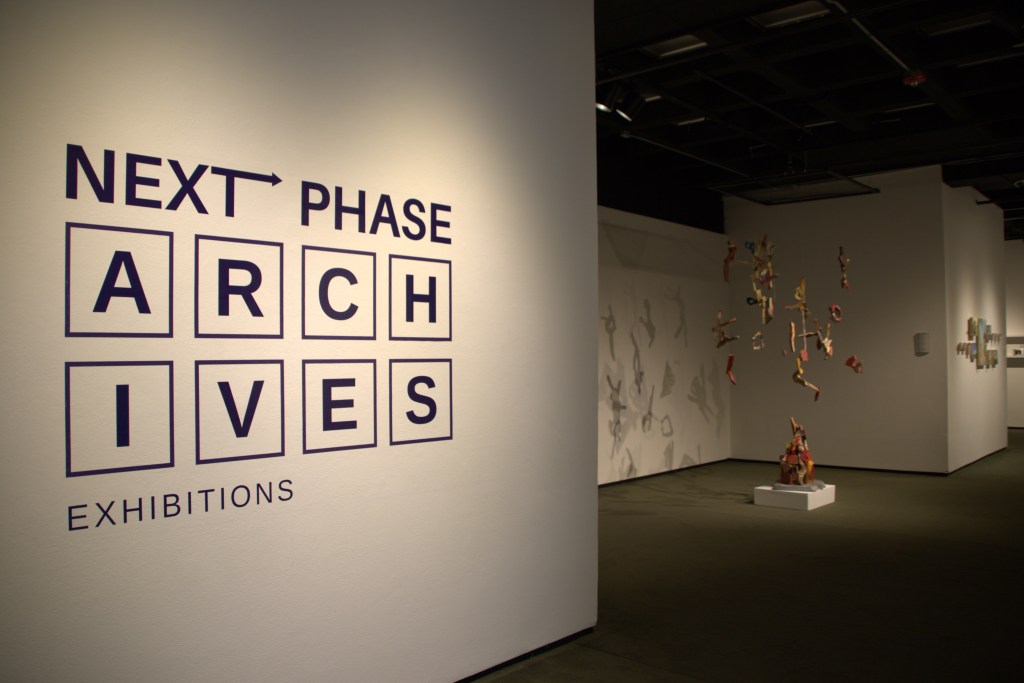
Figure 1 Next Phase entrance featuring the artwork of Julie Glass. Note. (Emma Sonnier, 2025). Courtesy of ARCHIVES Exhibitions.
Works of art often last forever, or nearly so. But exhibitions themselves, especially gallery exhibitions, are like flowers; they bloom and then they die, then exist only as memories, or pressed in magazines and books.
Jerry Saltz (2008), New York Magazine.
If you have ever visited a well-crafted exhibition, there is often a moment where the room ceases to be a room. The walls hold something more than artwork, and the air feels intentional. You are transported inside a conversation that someone designed for you to have with yourself. Exhibitions are not merely displays but environments built to hold and facilitate meaning-making, spaces where art and audience find each other and something passes between them.
For the last five years, I have worked alongside emerging and mid-career contemporary artists, helping shape how their work enters a space, how it is held, how it is seen, and how it is understood and felt. Through this, I have come to recognize exhibitions as one of the most powerful communicative mediums we have. It asks nothing of you but your presence, and in return, it offers the chance to feel, to question, learn, and be moved.
What are Exhibitions?
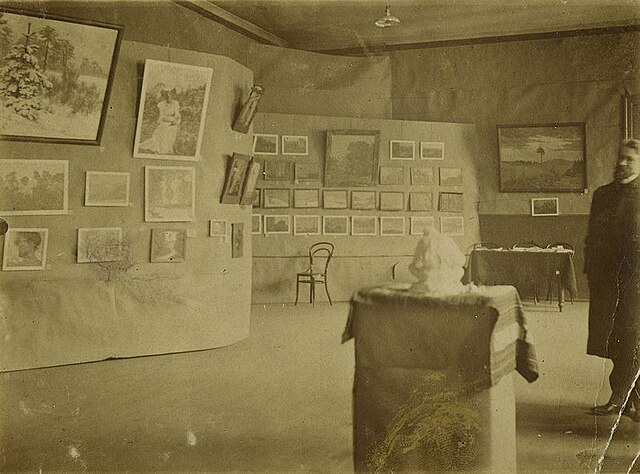
Note. (Creative Commons, 1910).
In the most basic sense, exhibitions are experiences, collaging and arranging objects and information in a space for audiences to engage with. However, that definition does not fully recognize the social and connective power of this medium. An exhibition is something far more alive, “a medium rooted in a multifaceted and multisensorial approach that contributes significantly to the learning potential of visitors’ museum experience” (Lachapelle, 2024, p. 125). It is not merely something to look at but a place that is built to be “occupied and inhabited, rather than passed through” (Lachapelle, 2024, p. 126).
Contemporary arts exhibitions, in particular, are distinct. Unlike spaces for history or natural history, they are often built around living artists – people with urgent ideas to express about the world we all currently navigate. To me, these exhibitions are one of the most powerful communicative tools we have for making the personal, the intimate, and the shared legible to a wider audience. It is not enough to hang artworks on a wall and hope people feel something, especially when an artist’s message is pointed. The space itself has to be designed with intention, balancing the needs of both the visitor and the represented through every decision.
How objects are arranged within a room shapes how they are seen, understood, and felt. What you see when you enter, where your eyes follow, where you rest, how much space artwork needs to breathe. These unseen choices communicate things before a label is read. But labels hold just as much weight in provoking and guiding connection. When accompanied by an interdisciplinary approach that creates “opportunities for interconnectedness across various disciplines” (McKenna-Cress & Kamien, 2013, p. 6), visitors with diverse backgrounds, beliefs, and proximity to the arts can all equally find entry points into the work.
The goal: a room full of ways in.
Designing Meaning: What does it Require?
Exhibition work is largely a design practice, demanding that artists’ visions, audience needs, the physical space, and institutional identities are considered all at once, deciphered, and translated into something coherent. It demands an eye for design, not aesthetics for aesthetics’ sake but an understanding of visual harmony – what appears balanced, when a gallery is too crowded, when colors and form clash and fight for attention.
“The four principles that guide exhibition design: arousing curiosity, challenging with demanding content, using narrative to facilitate insight, & provoking participation.”
Richard Lachapelle (2024), Interpretation design at a crossroads with museum education.
Communication is another skill that determines an exhibition’s success. Exhibitions are deeply collaborative, and the maker is often the person responsible for translating the abstract into something physical. They channel the artist’s concept, a community’s story, or a curatorial theme into each decision of object placement, lighting, and wording. In my own practice, this typically means hours of conversation with artists about their work, with gallery owners about their space, and with community collaborators about their goals and needs. It also means navigating disagreement about budget constraints, object placement, and programming decisions with transparency and grace.
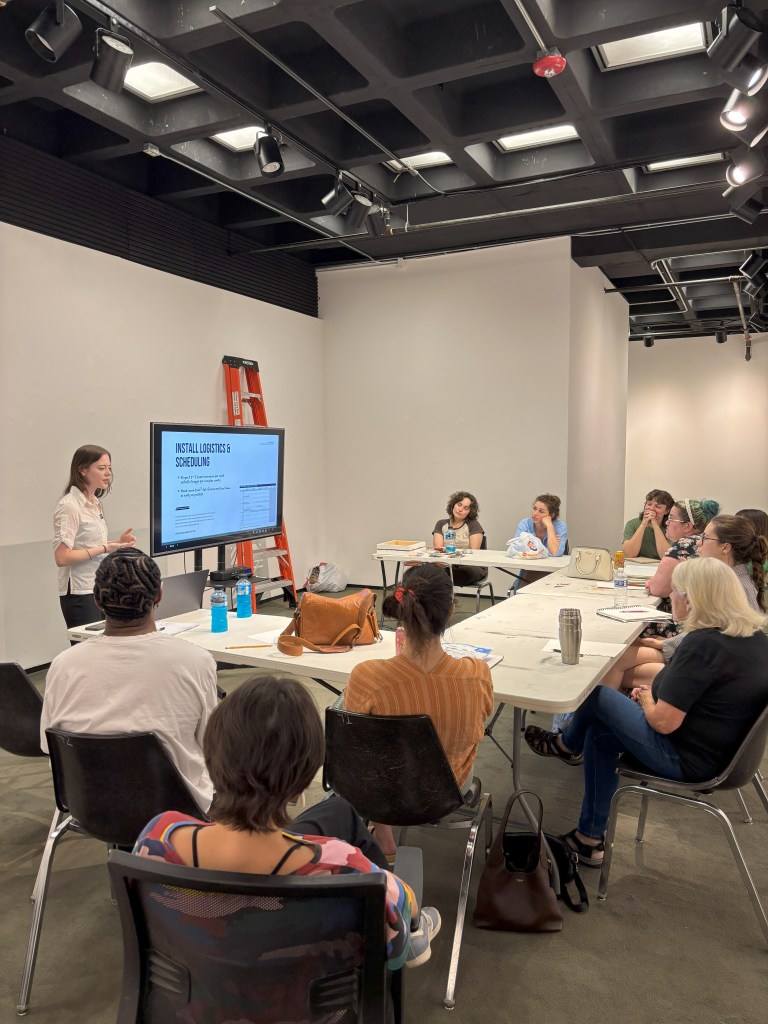
Equally as important is agility. Something will always surprise you – artwork arrives damaged, a mount breaks before opening, or a pipe bursts in the gallery. For this reason, exhibition teams must be “quick problem solvers” (Quenneville, 2019, p. 87).
Underneath this all is the foundation of integrity. Integrity for preserving accurate historical and artistic context. Integrity for the artists and collaborators who trust you with their ideas, and integrity in understanding that every exhibition is an extension of its hosting institution. Just as exhibition teams assemble multi-sensorial elements to communicate, visitors also play a role as assemblers through the process of “bricolage,” bringing who they are to an exhibit and uniting it with some portion of what’s on display, and out of that, assembling their experiences” (Summers, 2018, p. 4). That assembly should be revered, and it is the exhibition developer’s obligation to build a space worthy of holding this.
From Concept to Materiality: How does it come together?
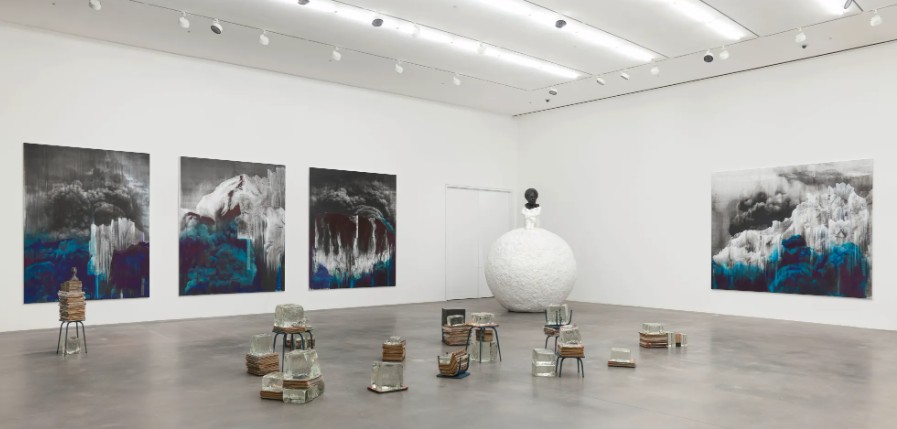
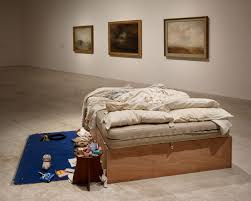
Every exhibition begins as an idea, often emerging from conversations. After a series of conversations between artist and curator, designer and educator, institution and community, the process moves through several next phases.
It begins with research and concept development, identifying information and themes, establishing a curatorial framework, and determining what audiences should learn and experience. Next is interpretive planning, where content is organized “in a way that will be best understood by museum visitors” (Quenneville, 2019, p. 80). This entails structuring the exhibition’s thematic order and outlining what will be incorporated into displays, labels, and interactive components. It is in this phase that the abstract becomes architectural, translated into reality through design and fabrication. Themes become areas, ideas become groupings, and feelings are channeled into a floor plan.
After the interpretive plan is finalized, paint color, light bulbs, mounts, and other necessary materials are selected and/or crafted. Exhibition texts are written, and interactive elements are designed for audience participation. This is a process centered around “user mind-set, agency, storification, and narrative closure” (Lachapelle, 2024, p. 127), encouraging exploration, active participation, communication through storytelling, and internal, personal reflection. Pedestals are moved, labels are rewritten, and objects are cut. In some way, the exhibition is always somewhat different from the first version imagined through installation and improvisation.
can technology deepen our capacity for intimacy?
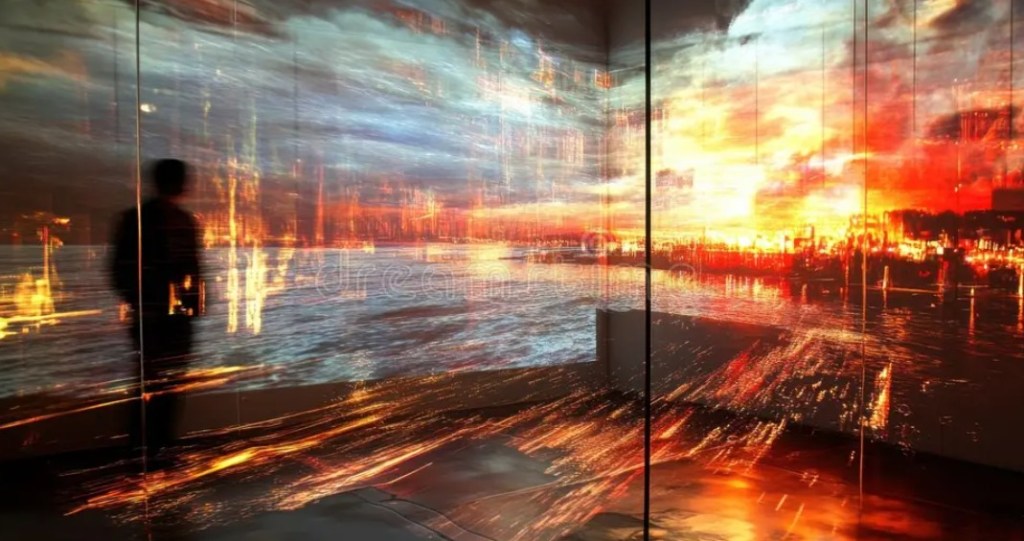
Technology can deepen our capacity for connection, but only when approached as a supplementary tool rather than the focus. The most meaningful uses of technology I have experienced are those that bring you closer to the artwork, not distract you from it. Augmented reality and virtual reality can immerse visitors inside an artist’s process and internal world. Touch Designer projects can create participatory experiences without requiring VR goggles or access to a personal phone. Participatory elements like community response walls, activity stations, and voice recorders invite audiences to contribute their own stories and experiences to the exhibition’s narrative. Most importantly, these tools honor audience agency (Lachapelle, 2024, p. 127).
At the same time, many technological components exist simply because they seemed impressive and innovative to management, not because of visitor and content needs. Ineffective uses of technology are not solely financial losses but also design errors. Each implementation should be honestly assessed.
Do visitors use it? Does it serve the artist and their message? Is it distracting? Does it fulfill learning goals? Does its benefit outweigh the cost?
Beyond Representation, What do we owe our audiences?
Diversity, equity, accessibility, and inclusion (DEAI) are fundamental commitments at every stage of exhibition development. It shapes what stories get told, whose voices are amplified, and how those stories are communicated visually and through wall text/labels. Words hold just as much weight as visuals. Inaccessible, condescending, or exclusionary text walls off further connection and alienates the viewer. Exhibitions are obligated to be “relevant and truthful not just to history but the world around us, and to be fully engaged with all of our communities” (Summers, 2018, p. 4). These motivations must be seen and felt in every curatorial decision, no matter how small.
DEAI also informs the physical space itself. Are pedestals and wall hangings installed at accessible heights? Can wheelchairs navigate comfortably between displays? Are there multiple entry points – audio, visual, tactile, and text – so audiences with different needs and learning styles can all connect with the content? Exhibition designers must be keenly “aware of audience expectations, and work closely with all stakeholder groups to strike a balance between preservation as a core mission, and change as a necessity in a changing world” (Waern & Lovlie, 2022 p. 198). This balance should be reflected through design choices made with real people in mind, not based on the idealized visitor.
Exhibition teams must consider visitors who use wheelchairs, who don’t read English, who are overwhelmed by bright lights and loud noises, and those who have never visited a gallery before and are unsure if this space is made for them. It is one of the most fundamental responsibilities to make room for these differences and hold the space for all to coexist.
Meaning lives in the space between artwork and audience. Exhibitions are the medium that allows the two to meet.
The exhibitions that have stayed with me and followed me home are the ones built with integrity, diversity, equity, accessibility, inclusion, and consideration at the forefront. One where a thousand small, invisible decisions are made with care. In our current cultural and political climates, where censorship is an increasingly present force, we must acknowledge that “the creation and display of art is entwined with the U.S.’s most fraught cultural and political debates” (Friedman et al., 2025), magnifying the importance of integrity in all choices.
To create an exhibition is to take a position. It states that these stories are worth telling, voices are worth hearing, and history is worth protecting. Exhibitions become more than just programming when created with respect, honesty, and a genuine commitment to serve the public.
Exhibitions become a communicative mechanism of care.
As we are demanded to consume quickly, move fast, and suppress feeling in the outer world, exhibitions make space for something radical: to slow down, look, feel, take part, be moved, and leave changed.
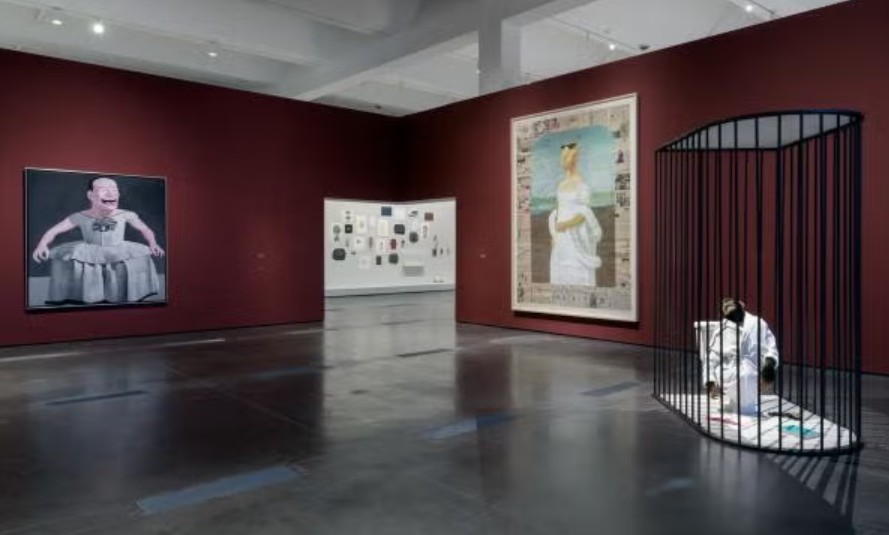
References
Friedman, J., Cruz, D. S., Khosravi, H., & Trébault, J. (2025). The Censorship Horizon. In PEN America. https://pen.org/report/the-censorship-horizon/
Lachapelle, R. (2024). Interpretation design at a crossroads with museum education. In P. Sinner, A. Sinner, & B. White (Eds.), Propositions for museum education: International art educators in conversation. Intellect (UK).
Landry, E. (2025). Next Phase exhibition installation workshop and roundtable led by Emma Sonnier [Photograph]. ARCHIVES Exhibitions LLC.
Lithuanian Art Society. (2010). 4th Lithuanian art exhibition organized by the Lithuanian Art Society [Photograph]. Creative Commons. https://en.wikipedia.org/wiki/Lithuanian_Art_Society#:~:text=Encouraged%20by%20the%20success%20of%20the%20first,15%20September%20%5B%20O.S.%202%20September%5D%201907.
McKenna-Cress, P. & J. Kamien (2013). Creating exhibitions: Collaboration in the planning, development, and design of innovative experiences. Wiley & Sons, NJ. [Chapter 1: “Collaboration” pp. 1-19].
Museum Associates. (2022). Legacies of Exchange: Chinese Contemporary Art from the Yuz Foundation Exhibition Highlights [Photograph]. LACMA Unframed. https://unframed.lacma.org/2022/01/25/legacies-exchange-chinese-contemporary-art-yuz-foundation-exhibition-highlights
Nedopekin, Y. (n.d.). Exquisite light display in an immersive art installation at an urban gallery during twilight [AI Generated Photograph]. Dreamstime. https://www.dreamstime.com/exquisite-light-display-immersive-art-installation-urban-gallery-twilight-visitors-admire-vibrant-projections-image367668423
Quenneville, A. (2019) Exhibition design from vision to visitor. [pp. 78-87].
Saltz, J. (2008). The day the lights went on. New York Magazine. https://nymag.com/arts/art/reviews/46424/
Sonnier, E. (2025). ARCHIVES Exhibitions: Next Phase entrance featuring the artwork of Julie Glass [Photograph]. ARCHIVES Exhibitions, LLC. https://www.archivesexhibitions.org/next-phase-featured-works
Summers, J. (2018). Creating exhibits that engage: a manual for museums and historical organizations. Rowman and Littlefield. [Chapter 1: The Nature of Exhibits pp. 3-12].
Tracey Emin’s filthy masterpiece — My Bed [Photograph]. (2018). Fine Art Multiple. https://fineartmultiple.com/blog/tracey-emin-my-bed/
Valentine, V. L. (2019). “Unanswerable”: Lorna Simpson’s London exhibition charts her subconscious and embrace of new mediums [Photograph]. Culture Type. https://www.culturetype.com/2018/03/17/unanswerable-lorna-simpsons-london-exhibition-charts-her-subconscious-and-embrace-of-new-mediums/
Waern, A., & Løvlie, A. S. (2022). Remediating, reframing and restaging the museum. In A. Waern & A. S. Løvlie (Eds.), Hybrid Museum Experiences: Theory and Design (pp. 197–212). Amsterdam University Press. https://doi-org.proxy1.library.jhu.edu/10.2307/j.ctv2cxx8x6.14
 Emma K. Sonnier | In Progress: A Museum Studies Journal
Leave a comment