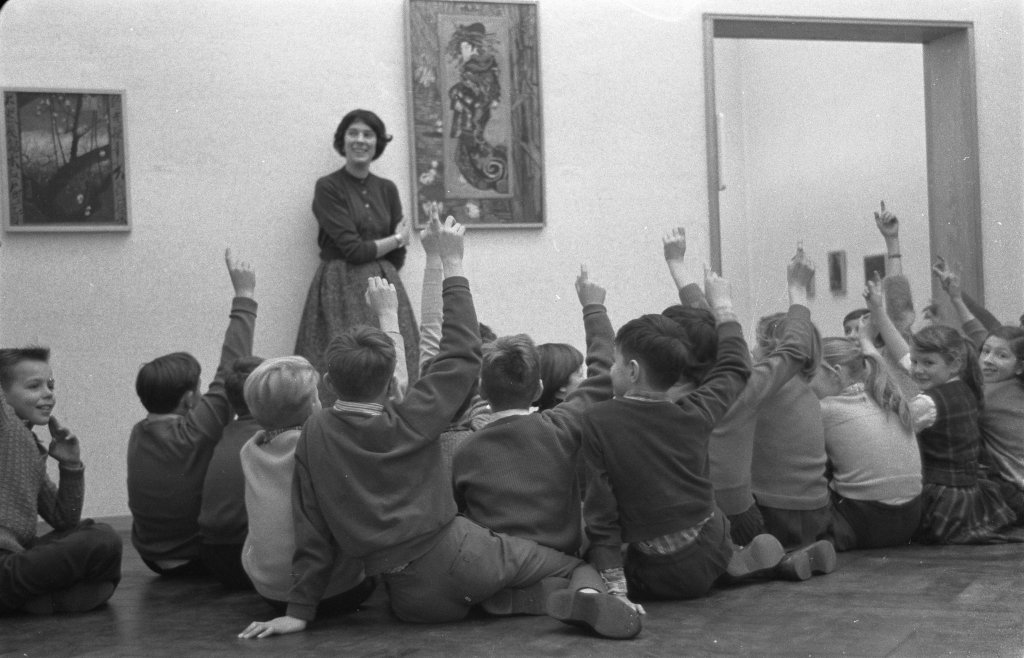
Museums are wormholes to other worlds. They are ecstasy machines. Follow your eyes to wherever they lead you… and the world should begin to change for you.
Jerry Saltz (2026), Instagram.
At its best, museum learning is an invitation to connect, wonder, question, and see yourself within the reflections of objects and those who have come before us. But invitations can be ignored… Learning inside a museum is voluntary, which means that educators must do something more delicate, more nuanced than lecturing: they must reach out, form connections, and make strangers feel what is held within gallery spaces was made especially for them.
Interpretation in this context becomes a connective bid, a purposeful act of closing the distance between audience and object, between the museum and the community past its walls. Galleries become rooms of belonging when interpretation is relevant and inclusive. When interpretation feels like an authoritative, unquestionable lecture, visitors walk out the gallery doors, untouched, unmoved, and unheard.
At the center of museum learning is care. Museum educators show visitors “how to make their own valid interpretations and follow their own lines of inquiry” (Talboys, 2018, p. 36).
It is intimacy over instruction, autonomy over the authoritative.
What is Museum Learning?
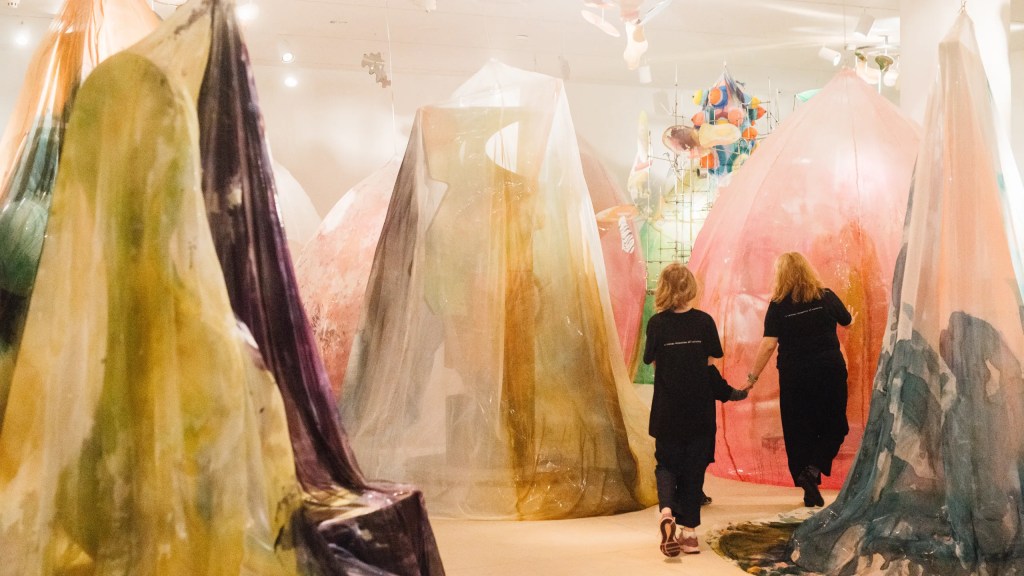
Museum learning is persistently misunderstood, defined by a central tension between preservation and access, by a responsibility to collections and to the public. It is the practice of creating meaningful connections between people and objects, between the museum’s mission and the communities it serves. More than tours or programming, it demands an ongoing commitment to making historical, cultural, and artistic knowledge relevant and useful to each and every person who enters a gallery.
Educators are translators from the past to the present: “paid specialists trained to further the public’s understanding of the natural, cultural, and historical collections and mission of a museum” (Kristinsdottir, 2016, p. 424). In the past, museum ‘education’ was authoritative, one-directional, and fixed. Visitors listened. They did not participate.
Now, the shift from museum ‘education’ to ‘learning’ is philosophical. It repositioned the learner over the teacher, experience over instruction, and open-endedness over set answers. The visitor has taken on an active role in meaning-making. Nobody forced them to attend or engage. This autonomy marks the main challenge and advantage of the field, demanding a responsive, symbiotic, flexible approach that feels human.
The primary goal:
“to foster contact between people… not to teach facts, but sow a seed of interest, a spark of inspiration” (Ambrose & Paine, 2018, p. 101).
The philosophical root:
learning that holds space for contradiction, for personal meaning, for inferences, and intuition.
Who holds the room?
The museum educator is a museologist, manager, administrator, expert, and curriculum designer. There is no single, unchanging definition of this role because it remains in flux, dependent on the people it serves. It is a role that “fulfills two functions and faces in two directions at once” (Talboys, 2018, p. 21): internally turned towards collections, and outwardly engaging the public and its needs, bridging the gap between. To hold the room is to balance that tension steadily and with great care.
Communication, flexibility, and empathy come together to form the core of this work (Talboys, 2018, p. 34). So does diplomacy, the invisible labor of navigating competing needs and interests when institutional priorities and visitor needs may clash. These ‘soft-skills’ create the infrastructure of meaningful, successful learning.
The best educators are not necessarily the most knowledgeable people in the room. They are the most perceptive and present.
What does it take to make strangers feel seen?
In practice, this connection begins before a visitor arrives. By the time an exhibition is displayed, an educator has already made a series of decisions about language, pacing, and audience. What relates to contemporary audiences? What are the universal focuses?
The first responsibility is interpretation, something not only a curator does. This explanation doesn’t simply tell; it opens space for dialogue with object, context, idea, and history. Interpretation “provokes the dialogue fundamental to education… and creates a two-way flow of information” (Talboys, 2018, p. 7) that creates active encounters. Labels tell you what you are seeing, while interpretation asks what you see and why it matters. This can happen on tours, through exhibition and program development, or in casual conversations.
Advocacy is the second responsibility. Museum educators “play a fundamental role in carrying out the public-facing elements of a museum’s mission… advocating on behalf of their audiences on the needs, interests, and relevance of collections and concepts” (Wood, 2023, p. 9). Advocating for your audience means understanding them through interaction and dialogue, honoring their desires, and refusing to let institutional voices dominate theirs. Empathy, diplomacy, and other core skills are integrated into every small decision about how learning is designed, delivered, and reflected upon.
To make a stranger feel seen is to take them seriously as co-creators and collaborators. To assume that their contributions are valuable. To meet them where they are, not where curricula say they should be.
Something that can only occur when bolstered by empathy, curiosity, and respect.
Can intimacy with a screen exist?
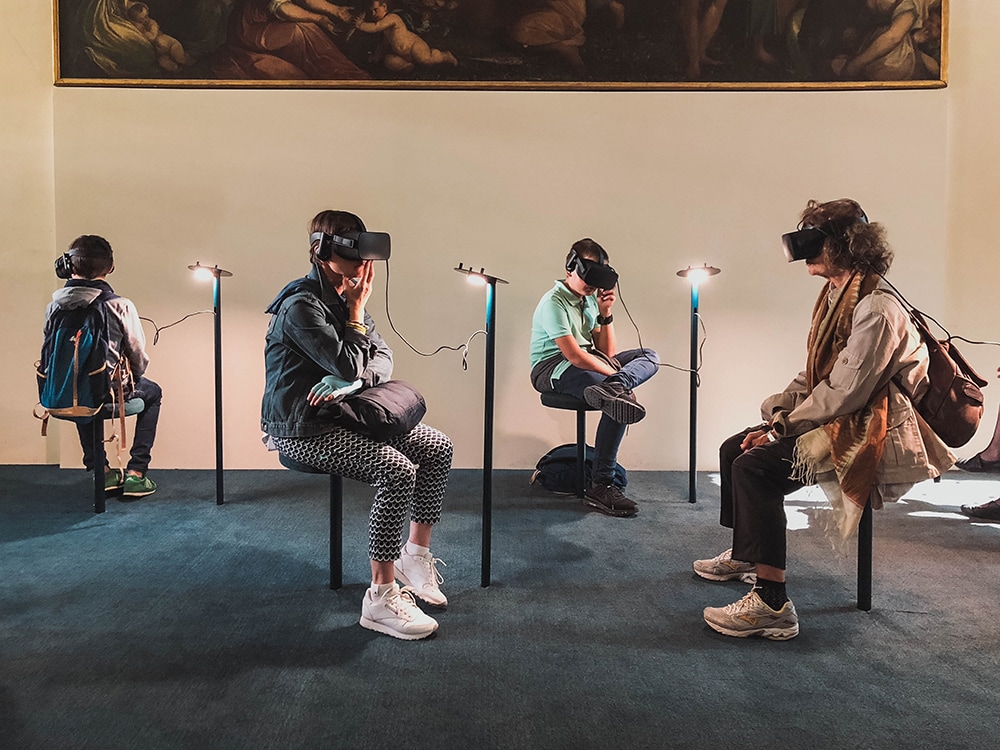
COVID-19 surfaced critical questions about the role of technology in museum education and engagement, “further accelerating digital transformation” across the field (Dumont et al., 2025, p. 398). Years of gradual, optional adoption were compressed into months following the closure of museum spaces. What emerged from this urgency? Digital tools can reach audiences that traditional programming could not. The visitor who processes differently, who hangs at the back of the group, who carries questions they are too nervous to ask. For them, a screen can be an act of generosity and inclusion.
Interactive platforms, immersive storytelling, and virtual experiences can create personal, self-directed encounters with content that foster autonomy and exploration (Dumont et al., 2025, p. 399). Intimacy requires being met and acknowledged. But technology is not a solution on its own. It is a resource that requires ample time, staff labor, and planning to achieve implementation goals. Museum educators already struggle against a persistent “lack of resources and professional development” (Kristinsdottir, 2017, p. 424). Managing digital offerings on top of this only compounds that pressure. Digital programs, requiring ongoing maintenance, training, and evaluation, risk becoming shelved and useless after staff time has already been spent. There is also the very real concern of digital fatigue.
Museums have always offered a rare space for slowness, presence, and physical belonging. Does the oversaturation of digital tools risk this long-standing strength?
Absolutely. This is why the goal is not to digitize the entirety of museum experiences but to expand reach. When thoughtfully and conservatively implemented, technology is a tool for access, meeting visitors where they are and dismantling the barriers that keep some people from ever feeling welcomed. Technology and equity must be inseparable.
Intimacy with a screen can exist. But only when there is human intention, consideration, and support behind it.
Who belongs?
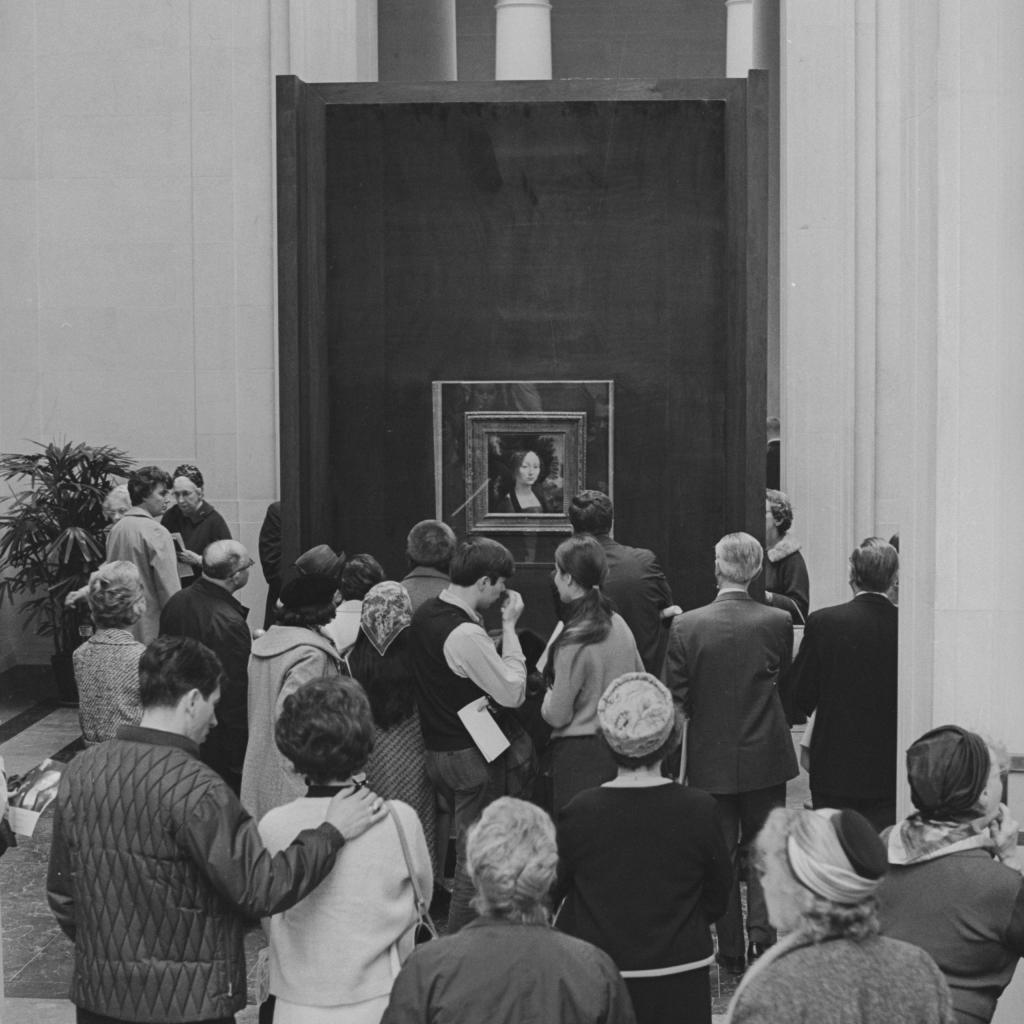
Belonging is the foundation of museum learning. Without it, interpretation, technology, and programming can feel performative and empty. A visitor who walks by unseen and unwelcome, feeling like an intruder, will not come back. It is a lived experience that most of us carry in some form.
DEAI (Diversity, Equity, Accessibility, and Inclusion) is not four separate initiatives but interlocking commitments that amplify a museum’s mission. Access is about reach, removing barriers that prevent people from interacting. Diversity ensures that visitors see themselves reflected in what the museum holds, how it speaks, and who it employs. It invites, cultivates, and sustains fresh perspectives through intentional engagement across waves of audiences. Equity is the commitment to equal outcomes, regardless of who you are. It ensures that the child of a first-generation immigrant receives the same education as the child of a major donor. It fights against the notion of museum learning as a tiered service depending on what you can do for the institution. Inclusion binds all of this together, ensuring that every person feels genuinely welcomed into dialogue and meaning-making.
This is an urgent need in many cultural organizations. A museum rooted in a particular community’s history has the distinct responsibility of honoring that community while also creating entry points for ‘outsiders’. Exclusivity can feel like protection at times, but a museum who speaks only to those who already know is a museum that is crippled and static.
New museology has pushed “making museums more accessible through a revision of community relationships” (Kristinsdottir, 2017, p. 427), recognizing that accessibility is the central axis around which meaningful learning turns.
The relationship between ‘learner’ and educator is, at its best, “symbiotic, reciprocal, and inclusive, centering marginalized voices” (Porter et al., 2023, p. 16). This must be the standard. A museum that does not belong to everyone belongs to very few. An unsustainable model that restricts growth, engagement, and connection.
I have not always felt at home in museums. Sometimes I’ve left feeling spoken for instead of spoken to. But at Le Centre Pompidou, something clicked within me. The contemporary collection reflected a breadth of experience I rarely encountered elsewhere. The interpretive labels did not tell me what to think. They simply opened the door to understanding and stepped aside. I felt autonomy to see, think, and speak.
I stood in front of Jenny Holzer’s Inflammatory Essays for quite some time. The work is a series of provocative texts about power, government, and the weight women carry. In that space of encountering, Holzer’s words were not being used or exploited. They were simply present and honest. It felt like permission to respond and speak. I spoke with a stranger, staying there longer than either of us had planned, exchanging something unscripted and real in front of words that felt validating. It was a bid for connection that hooked me. It was interpretation doing its job.
Intimacy is what happens when an institution decides its visitors are worth knowing.
Museum learning is not about what an institution wants visitors to leave with. It is about what visitors are allowed to bring to the table and lay bare without judgment or barrier. Their personal questions, histories, anger, joy, skepticism, doubts, hopes. When a museum creates the conditions to turn towards a stranger and say, yes, I feel that too, it has done something that a classroom may struggle to replicate.
This requires honest, even painstaking, reflection on who is represented, who is staffed, who is making meaning, and who holds power. It requires educators to see the whole person in front of them. This introspection is the catalyst for institutional growth and success.
Museums are not just for the public. They are comprised of it. Until that shapes every decision at every level, belonging will remain something museums talk about instead of something felt.
REFERENCES
Ambrose, T., & Paine, C. (2018). Museum basics : The international handbook. Taylor & Francis Group.
Anjali, & Anjali. (2021). Immersive technology in museums and exhibitions | Fulldome Pro. https://fulldome.pro/blog/immersive-technology-in-museums-and-exhibitions/
Dumont, C., De Backer, F., Dewinter, H., & Vandermeersche, G. (2025). Museum educators’ views on digital museum education: opportunities and challenges. Cultural Trends, 34(3), [pp. 398–413]. https://doi.org/10.1080/09548963.2024.2378324
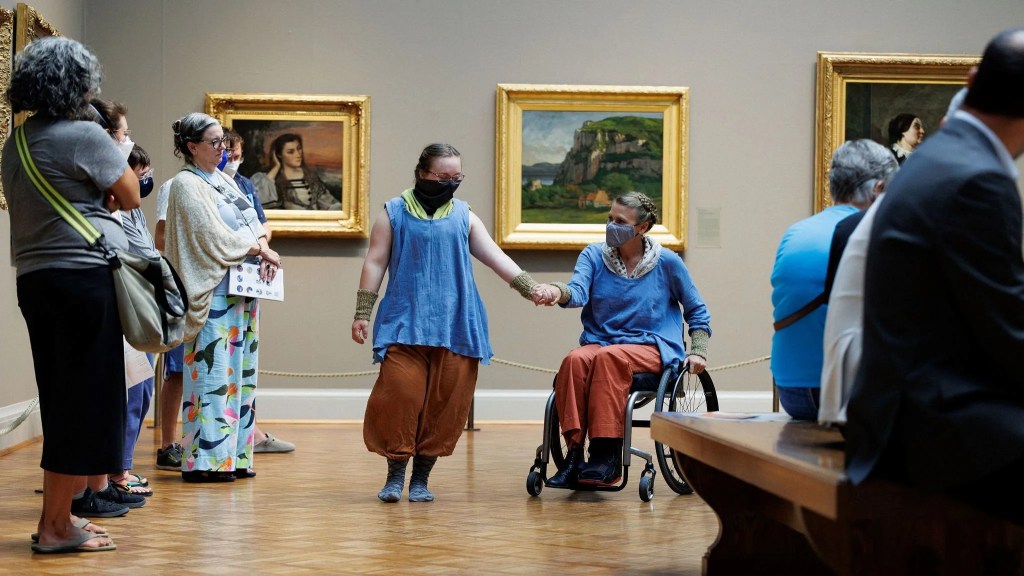
Feldt, A. (2023). Sydney Erlihk gazes up at her dance partner Maypril Krukowski, who moves in a circle around the gallery in their performance Right to Wander [Photo]. Art Institute of Chicago, American Alliance of Museums. https://www.aam-us.org/2023/10/06/disrupting-museum-behavior-an-exploration-of-the-art-institute-of-chicagos-cripping-the-galleries/
Kristinsdóttir, A. (2017). Toward sustainable museum education practices: confronting challenges and uncertainties. Museum Management and Curatorship, 32(5), [pp. 424-439]. https://doi.org/10.1080/09647775.2016.1250104
Porter, J., M. Cunningham, & Leftwich, M. (2023). Leading from the front lines: As museums focus on community engagement, museum educators are more important than ever. AAM, 102(4), [pp. 14-16].
Pot, H. (1960). Children during a museum lesson at the Stedelijk Museum Amsterdam in 1960 [Photo]. Nationaal Archief, Anefo Photo Collection, https://commons.wikimedia.org/wiki/File:Amsterdamse_Vondelschool_naar_de_wekelijkse_museumles_in_het_Stedelijk_Museum,_Bestanddeelnr_910-9352.jpg
Talboys, G. K. (2018). Museum educator’s handbook (3rd ed.). Routledge. https://doi.org/10.4324/9781315212432
Unknown. (2023). Visitor research from a Dallas Museum of Art exhibition focused on multisensory engagement revealed strategies museums can use to accommodate more learning styles [Photo]. Dallas Museum of Art. https://www.aam-us.org/2023/01/20/different-by-design-a-new-inclusive-framework-for-accessible-museum-exhibitions/
Wood, E. J. (Ed.). (2023). A new role for museum educators: Purpose, approach, and mindset. Routledge.
 Emma K. Sonnier | In Progress: A Museum Studies Journal

Leave a comment